A Monkey in Manhattan
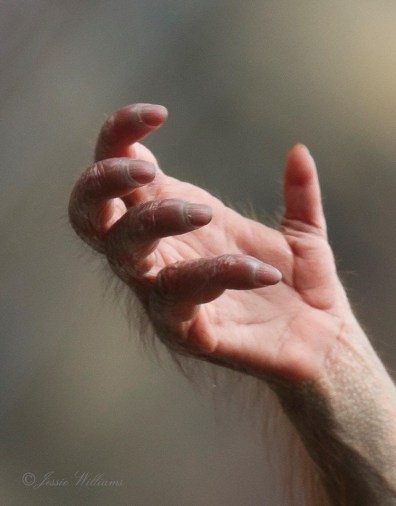
This ape's thinking has evolved sufficiently to know that this is all there is.
You can scroll the shelf using ← and → keys
You can scroll the shelf using ← and → keys
Eritis sicut Deus, scientes bonum et malum
In the day ye eat thereof, then your eyes shall be opened, and ye shall be as gods, knowing good and evil’
I’ve been researching war records for background information for a character for a book. I’m interested in the feared Japanese invasion of Calcutta in 1942 after they had taken Burma, Thailand and routed the British forces to seize control of Singapore. The then British Raj is in its last throes. The Indian Nationalist voice, ‘Quit India’ is becoming more powerful exacerbating the difficulties in fighting the war in Europe, North Africa and the Pacific.
So…who is the Governor of Bengal at this time? – Read on!
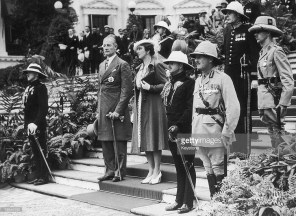
John Arthur Herbert is the son of a diplomat and an american emigrant. The First World War abruptly cuts short his education and he enlists into the Royal Horse Guards. A year later, he is commissioned as a temporary second lieutenant which becomes a second lieutenant and then a lieutenant in ‘the Blues’. After hostilities ends, the household cavalry is reorganized and permanently stationed in London throughout the inter-war period. Herbert is made a captain.
He marries into aristocracy. His bride is 21 year old Lady Mary Theresa Fox-Strangways. Several hundred invited guests hold up the Kensington traffic along the Brompton road as far as Harrods at their wedding The reception, held at Holland House which has been owned by the Fox family for the last 200 years and handed down to Lady Mary’s father, the 6th Earl of Ilchester, is a very lavish affair. Gifts for the bride include a diamond cipher and monogram brooch from the king and queen, a gold and alabaster clock from Princess Mary and Viscount Lascelles; a shagreen cigarette case from the Duke and Duchess of York and a pair of silver lamps from Princess Victoria.
Herbert follows his father as the Master of the foxhounds of the Monmouthshire pack, managing to combine the job with being Adjutant of the Blues. In 1934 he is made into a honorary Major and contests the Monmouth by-election; it has always been a safe conservative hold. Herbert duly holds on to it in the following year’s general election and during his five years at Westminster, he becomes an assistant unpaid whip. Herbert, by no stretch of any imagination, gains great experience in the affairs of state. In parliament he only makes 13 utterances, according to Hansard so it is quite a surprise to all, when it is announced, that he is to become the new Governor of Bengal in ’39 on the death of the very popular Lord Brabourne.
At this point, there is an obvious need to increase Herbert’s ‘noteworthiness’ or ‘precedence’. His rank of Major is upgraded to Colonel and he is hastily made a Knight Commander of the Indian Empire, GCIE. The award of the various orders of chivalry in these years is quite breathtaking. Herbert is comparatively a nobody but is advanced with all the nepotism that characterises British government in these (any?) days. The Indian Civil Service especially notes his appointment ruefully. According to several top ICS officers who serve under him, including one who was his private secretary, and this is putting it mildly, he is not considered having the necessary talents for the job. Herbert, by all accounts, possesses ideas that fall admirably in line with the imperial designs of the British. To add to his rather complex character, he is known as ‘Herbert the pervert’ in intimate circles for some of his strange proclivities. In governship he acts with brutally repressive measures, deploying both the police and the military who take the law in their own hands. They make few arrests. Instead they kill, burn, torture, maim and rape, all with a carte blanche issued by governor Herbert.
So in December 1942 with the Japanese bombing Calcutta and the fear that India would be invaded from the east, Churchill the instigator with the compliance of Viceroy Linlithgow and Herbert the puppet, push a scorched earth policy – which goes by the sinister name of Denial Policy – in coastal Bengal. Authorities remove boats (the lifeline of the region) and the police destroy and seize rice stocks. The consequences of these actions, in tandem with devastating floods caused by a cyclone, are cataclysmic. The Bengal Famine of 1943 is not covered in British history lessons and was wholly covered up in the years after the war. When we’re asked about the holocaust, we should ask – “Which one?”
Starving people beg for the starchy water in which rice has been boiled. Children eat leaves and vines, yam stems and grass. Parents dump their starving children into rivers and wells. Many take their lives by throwing themselves in front of trains. People are too weak even to cremate their loved ones as no one has the strength to perform the usually essential rites. Dogs and jackals feast on piles of dead bodies in Bengal’s villages. Cannibalism exists. The ones who get away are men who migrate to Calcutta for jobs and women who turn to prostitution to feed their families. Mothers turn into murderers, village belles into whores, fathers into traffickers of daughters.
The famine ends at the end of the year as soon as the military and commercial logistics, together with the will, prevail to move grain and rice stocks from other areas of India. This is initiated by the new incumbent of Viceroy, Field Marshall Wavell. It has since been established how Churchill and his associates could easily have stopped the famine but they refused, in spite of repeated appeals including the President of the United States. Government stocks are released but only to feed the people of Calcutta, especially British business people and their employees, railway and port workers and government staff. Controlled shops are opened for more important Calcuttans and the urban population never suffer too greatly. The rural masses, however, are left to the wolves.
The Bengal Famine was not caused by lack of food. Generally the estimates of the death toll are between 1.5 and 3 million, taking into account death due to starvation, malnutrition and disease.
Half of the victims died from disease after food became available in December 1943. Food production was actually higher in 1943 compared to 1941 but the British Empire took 60% of all harvests and ordered Bengal to supply a greater proportion of the food for their army to fight the Japanese. As in previous Bengal famines, the highest mortality was not in previously very poor groups, but among artisans and small traders whose income vanished when people spent all they had on food and did not employ cobblers, carpenters, etc. The famine caused major economic and social disruption, ruining millions of families for decades to follow.
Before his (un)timely death at the end of 1943 to which some high ranking ICS personnel have written, ‘good riddance’, Sir John Arthur Herbert was sanctioned by the King in promotion in and appointment to The Venerable Order of the Hospital of St John of Jerusalem. The order was founded throughout the Commonwealth of Nations, Hong Kong, the Republic of Ireland, and the United States of America,with the world-wide mission “to prevent and relieve sickness and injury, and to act to enhance the health and well-being of people anywhere in the world.”
His wife, Lady Mary was awarded the Kaisar-i-Hind gold medal (for usefulness in or for India) in 1942. Herbert’s military secretary, Lt Col Wilmot Bloomfield Peel writes in an obituary for Lady Mary, …. ‘her devotion to duty was unsparing as was the loyal and encouraging help she gave to her husband in alleviating the distress caused to the people of the province by the floods and famine, the destruction and horror of which shook the stoutest souls.’
A Commission’s report into the famine was well organised, coherent, filled with information – and utterly misleading. When the Commission had finished its considerations, the Chairman, Sir John Woodhead, ordered the destruction of all the evidence gathered. The Commission was a tremendous success. It delayed and concealed the issues involved, and, coupled with the careful press censorship enforced at the time, the whole issue of the famine was misted over and forgotten.
There is a problem with British military history, succinctly outlined by an American historian and author, Barbara Tuchman:
No nation has ever produced a military history of such verbal nobility as the British. Retreat or advance, win or lose, blunder or bravery, murderous folly or unyielding resolution, all emerge alike clothed in dignity and touched with glory. Every engagement is gallant, every battle a decisive action. There is no shrinking from superlatives: every campaign produces a general or generalship hailed as the most brilliant of the war. Everyone is splendid: soldiers are staunch, commanders cool, the fighting magnificent. Whatever the fiasco, aplomb is unbroken. Mistakes, failures, stupidities and other causes of disaster mysteriously vanish. Disasters are recorded with care and pride and become transmuted into things of beauty.
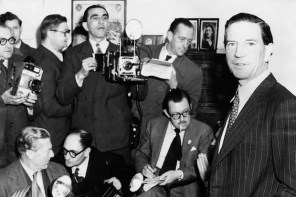
The machinations of the ruling elite are far more transparent and accountable nowadays with the access that all media gives us to the workings of government, the military and the secret services.
A bold statement? Consider two iconic historic figures for validation.
In return for a fee of £5,000, two oil companies, Royal Dutch Shell and Burmah Anglo-Persian Oil Company [later BP], asked Churchill to represent them in their application to the government for a merger. By modern British political standards, the 1923 payment would be considered highly inappropriate, nevertheless Churchill agreed to use his parliamentary influence to raise the issue in return for money. He accepted all sorts of gifts, which in today’s culture of full disclosure would get you expelled from the Commons. But those rules were not in place at the time. The Register of Members’ Interests was only introduced in 1975. You can argue that it was a conflict of interest, you can even argue that it was wrong, but etiquette dictates that you can’t call it a bribe in the sense that it wasn’t actually illegal. Politicians links with business and the media weren’t under the same level of scrutiny as they are now, “he was operating in a slightly different ethical environment.”
Churchill’s detested other ethnicities and races, he believed in the supremacy of the white race. In Churchill’s view, white protestant Christians were at the top, above white Catholics, while Indians were higher than Africans. Churchill saw himself and Britain as being the winners in a social Darwinian hierarchy. Even Prince Philip couldn’t get away with the following:
When Mahatma Gandhi began his peaceful resistance in India, Churchill was outraged and said: “He ought to be lain bound hand and foot at the gates of Delhi, and then trampled on by an enormous elephant with the new Viceroy seated on its back.”
“I hate Indians. They are a beastly people with a beastly religion.”
“I am strongly in favour of using poisoned gas against the uncivilized tribes… it would spread a lively terror.” Why is it unfair “to fire a shell which makes the said native sneeze – it really is too silly”.
In blaming the Indians for the 1943 Bengal famine which accounted for an estimated 3 million lives, he referred to the fact that they “breed like rabbits”.
But in God and Churchill we put our trust. After all, he won the war along with Monty, Kenneth More and the Bletchley crossword crew.
Secondly and recently, I have known two instances of when young university graduates who, on applying for jobs with MI6, have their families and partners interviewed for background clearance. Understandable and perfectly laudable. These people know what they’re doing, you idiots. They’re from a higher sphere of intelligence and influence despite the outing of the Cambridge spies; Burgess, Maclean, Philby and Blunt being an incredible record of incompetence and naivety. Still take confidence in our secret services, surely you’ve read how in John le carre’s classic, ‘Tinker Tailor Soldier Spy’ George Smiley masterly flushes out the mole. The material above about Churchill is widely known and documented but consider this from wikipedia:
‘Philby is summarised as a British traitor and an anti-Semite. It is suggested Philby never forgave the British government for ending his civil service career (due to sexual misconduct). Once recruited by MI6, according to these authors, Philby used his intelligence assignment to take revenge on the British government. With the extensive contacts he acquired as a British agent, Philby continued to betray British policy and resist all efforts at creating a Jewish homeland throughout his life. Philby disclosed classified British intelligence to Ibn Saud during wartime; he secretly helped secure American oil concessions in Saudi Arabia, double-crossing British competitors; he created economic partnerships, allied against British interests and in favour of Nazi Germany, with the help of Allen Dulles (later CIA Director); and Philby worked with Nazi intelligence to sabotage efforts at creating a Jewish homeland.’
..and your point is? – Well the Philby above isn’t Kim Philby one of the Cambridge four, it’s his father St John Philby!! Good background checking, I don’t think, you shaken but not stirred fuckwits.
https://en.wikipedia.org/wiki/St_John_Philby (Occupation:- Arabist, explorer, writer and…intelligence officer!)

The Experiment was a documentary series broadcast on BBC television in 2002 in which 15 men were randomly selected to be either “prisoner” or “guard”, contained in a simulated prison over an eight-day period. The men were initially tested and screened by clinical psychologists and were broadly judged to be ‘good ‘men.”The BBC Prison Study explored the social and psychological consequences of putting people in groups of unequal power. It examined when people accept inequality and when they challenge it”.
In a very short time indeed, the disunion between the two groups encompassed phases of conflict, order, rebellion and tyranny. The guards lacked a sense of common identity from the start. They could not agree on values and goals leading their group to be disunited and vulnerable to exploitation by various prisoners. Some members of both groups did try to work hard to achieve their group goals but were frustrated – either because they lacked group identity and group power or because they are unwilling to exert group power. As a result they became burnt out, despondent and stressed. The conclusions of the study point to important links between social psychological factors (group identity, group solidarity) and significant clinical outcomes (anxiety,depression). Mental health may be ‘all in the mind’, but the state of the mind is powerfully shaped by the quality of group life.
So what has this got to do with the likes of Mr. Trump?!
See if you can read any similarities what transpired in those eight days and what is happening in America today. Here are the conclusions of the study:
Successful groups give their members the power to put ideas into practice; this brings psychological benefits to individual members. The implications for a society vary and will depend upon the particular belief systems associated with particular groups. Where these beliefs are undemocratic and oppressive, groups can be tyrannical. Conversely, where these beliefs are democratic and open, groups can safeguard humanity.
But why do people support oppressive groups? When and why do we fall under the spell of tyrants? Our study suggests that this happens when groups fail. When people cannot realize their own values and beliefs, they are more likely to accept alternatives – however drastic – that provide the prospect of success. In particular, when their group is failing, they are more likely to embrace a strong figure who promises to make things work for them. It is this combination of failure and promise which made our participants become more authoritarian. In history too, these are conditions that have precipitated tyranny.
The answer to tyranny is not to distrust or to fear power. It was this that created problems for the Guards’ regime and for the Commune. Rather, the answer is to use group power responsibly, democratically and in defence of humane values. In this way, we can act together to resist tyranny – either one imposed by others or one made by ourselves.
In Statistics, discrete variables, such as people, apples and words, are countable. Before leaving the pub, you’re asked.. “How many glasses of wine have you had?” You can’t have 1.5 televisions. On the other hand, continuous quantities such as time, height, volume, alcohol and emotion (?) are measurable. The only limit to you knowing the length of your table is your measuring device. In fact you could argue that by continually zooming in on the end of the tape measure in ever-increasing smaller divisions , you can never state exactly how long the table is. On the way home from the pub you’re asked… “and how much have you had to drink, Sir?”
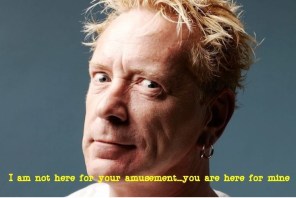
Could this be a explanation why it’s so difficult to convey our feelings and emotions which are fluid and indefinite by words which are concrete and finite. John Lydon certainly thinks so in this Radio 4 interview with Stephen Fry:
http://www.bbc.co.uk/programmes/p02z834v
Two alley cats discussing the pursuit of happiness.
One says, “No matter how much I chase my tail, I never can catch it.”
“Oh,” says the other one, “I used to do that and now I don’t feel I need to because I’ve found it follows me wherever I go!”

My chemistry teacher told me at school, to demonstrate the size of a molecule, that if you take a beaker of water from the oceans of the world, count the molecules therein and then replace the water and take a second beaker, there will be 20 000 molecules that were in the first beaker that could also have been in the second beaker. This is to say that, there are 20 000 more molecules in a beaker of water than beaker of waters in all the oceans of the world. That’s how small a molecule is!
Now, as a teenager, I couldn’t help but think, what if you were to take the first beaker of water off , let’s say, Japan and the second off Newfoundland! Literally speaking, surely there would be no overlap of contents, I was of course completely missing the point but all the same I’ve got you there haven’t I Sir? – Well, not necessarlily so. The beaker metaphor depends on you understanding that it illustrates the numerical comparison between the two quantities and you need to realise it is a comparison between the pure probability of each event happening. That is, that each molecule has a equal chance of being in both beakers, if you like, that the oceans have been vigorously ‘stirred’ and a sufficient amount of time has been left for free movement.
Imagine my literal delight/surprise to learn 40 years later the following:
The atmosphere is very dynamic. Oxygen, Nitrogen, even carbon particulates are very quickly homogeneously distributed throughout the biosphere. In a book by Harlow Shapley, “Beyond the Observatory”, the journeys of the inert gas argon are outlined. Apparently, we take in like 3×10^19 atoms in every breath, and in one week these atoms are already distributed throughout the country! A very famous example of the recycling of atoms is this. Every breath that you take, there is about a 100% chance that you will inhale at least one air molecule that was exhaled by Julius Caesar in his dying breath. In Bill Bryson’s book, ‘The Short History of Nearly Everything’ he writes that each of us share atoms that once made up Shakespeare but of course this could be any historical figure if enough time has passed to make statistical sampling unbiased.
It’s interesting that Shakespeare is used as an example of a notion for he himself (or more likely Edward de Vere) contemplated this concept in Hamlet:
Hamlet: (Examining Yorick’s scull) Dost thou think Alexander lookt o’ this fashion i’ th’earth? Horatio: E’en so.
Hamlet: And smelt so? Pah! [puts down the scull]
Horatio: E’en so my lord.
Hamlet: To what base uses we may return, Horatio! Why may not imagination trace the noble dust of Alexander till he find it stopping a bung hole?
Horatio: ‘Twere to consider too curiously, to consider so.
Hamlet: No, faith, not a jot; but to follow him thither with modesty enough, and likelihood to lead to it; as thus; Alexander died, Alexander was buried, Alexander returneth into dust; the dust is the earth; of earth we make loam; and why of that loam whereto he was converted might they not stop a beer-barrel?
Imperious Caesar, dead and turned to clay,
Might stop a hole to keep the wind away:
O, that the earth that kept the world in awe
Should patch a wall t’expel the winter’s flaw!
This view, would lead to describe oneself as a temporary collection of assorted atoms that have been re-cycled from other objects and are currently assembled in such a way as to create a sentient entity,
The atoms that currently form me will have all come from something else. Some may have previously been in the rocks of Mount Everest, or perhaps they were sea water, a giant redwood tree, oxygen in the atmosphere, or the soil under our feet. They could have come from just about anything, even from other planets. Some of my atoms will previously have been part of another person many years ago, and after my death, given enough decades to fully re-circulate, will again form part of someone else, and also something else. All over the planet, since it was created, atoms have been busily re-cycling from one form to another; at times being part of inanimate objects and other times being part of a living thing, be it plant or animal or human. In a strange and paradoxical way we are both temporary and eternal, nothing and everything, thanks to our atoms.
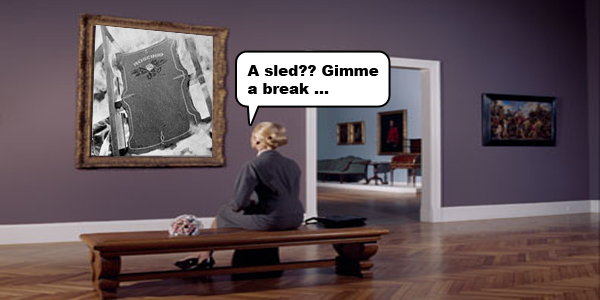
The Anastasia question is a concept I have been thinking about for many years.
Grand Duchess Anastasia, the youngest daughter of the last Russian Tsar, you’ll remember, was executed with her family by the Bolshevik secret police in 1918. Persistent speculation arose, after her death, as to whether she might have survived leading to several women falsely claiming to be Anastasia, of whom Anna Anderson is the best known. Conclusive proof finally confirmed that she was not Anastasia when DNA testing in 1994 on available pieces of Anderson’s tissue and hair showed no relation to the DNA of the imperial family.
This is my question, it’s my game if you like!
What is the one question or fact about yourself that would convince the most incredulous scrutineers that you are in fact who you claim to be. Now you wouldn’t believe how stringent my rules are for this profound secret. In my testing of this ‘Rosebud’ I think of myself as a secret agent being trained over many months to penetrate the network of a fiendishly suspicious and sceptical enemy. Their questioning of who I am is based on them holding every piece of detail of my life and knowing that professional fraudsters can be trained to be completely convincing replicates. This question easily transcends DNA testing. It is absolute. There was and never can be any seepage of this fact between you and the questioner. The Anastasia game of mental solitaire is actually the search for the fact, the question never gets asked! In short, it is what question is the very key to your soul?
Let me give you an example of a near miss for me, lest you think well that’s easily done – just think of something that happened in your childhood.
We have in our kitchen a ramshackle excuse for a crockery set that we everyday try to home on a three-tier small wall shelf system. The cereal bowls, dinner and side plates are all different sizes and colours. The sort of miscellaneous collection you get when you break a piece or two from a set, renew but don’t throw away the existing members. It’s difficult to place each member onto the shelves because there are certain O.C.D. rules to observe. You can’t, for instance, put a bigger plate onto a smaller one or have our favourite mugs, the thin rimmed ones, on the top shelf where you would have to momentarily exert wasteful energy and go on ‘tippy-toes’ to retrieve! Anyway, it works for us and like doing a three-dimensional jigsaw puzzle, I enjoy the swapping and repositioning of the pieces to get them so they fit. The singularly important point in this ‘invisible’ mundane action that nobody else would discern, let alone record, is that the same word always pops into my thoughts when I am in the process of doing it and that is ‘Cravat’. This is interesting solely for me in that there is only one person, (I think!) in the whole universe who would know what the significance of me saying that word in that situation and that is my brother Richard even though we have not uttered this word together for what must be nearly 50 years.
Does this qualify for an Anastasia question? Well since the advent of the internet which makes it clear to us all how individual how unique we are so not, no not necessarily. Thinking in computer-speak, the password security strength of Cravat is compromised by the assumption that nobody else remembers playing Cravat, a card game for two players in which you strive to re-position cards in an array in the minimum number of moves, to which your opponent challenges you with a cry of ‘Cravat’ if he sees a way of doing it with fewer.
– It’s good mind but nowhere near 100% impervious and spy proof.
Happy searching!!
Wars are nearly always for economic reasons and have always provided opportunities before, during and after conflict for commerce, the most recent war in Iraq being no exception.
Not only is it widely recognised that the case for military action against Iraq was based on a pack of lies but also that British and American companies supplied Saddam Hussein arms and gas in the first place.
The 1990 – 2003 financial and trade embargo applied against Iraq by the U.N. had huge humanitarian impacts on the country. What may come as a surprise to some people is that the biggest sanctions busters were in fact American companies allegedly with the full knowledge of their government.
During the actual war itself, billions of dollars of Iraq’s wealth went missing. Oil was shipped out of the country and sold. Federal contracts to supply the military were huge, the biggest $39.5bn being awarded to Halliburton, which was formerly run by Dick Cheney, vice-president to George W. Bush. In fact, the US hired more private companies in Iraq than in any previous war, and at times there were more contractors than military personnel on the ground.
The following quote from a former US Marine general shows that in the modern era it has always been so:
“I helped make Mexico, especially Tampico, safe for American oil interests in 1914. I helped make Cuba and Haiti a decent place for the National City Bank boys to collect revenues in. I helped in the raping of half a dozen Central American Republics for the benefits of Wall Street. The record of racketeering is long. I helped purify Nicaragua for the international banking house of Brown Brothers in 1909-1912. I brought light to the Dominican Republic for American sugar interests in 1916. In China I helped to see to it that Standard Oil went its way unmolested. During those years, I had, as the boys in the back room would say, a swell racket.” (General Smedley Butler, from a speech in 1933.)
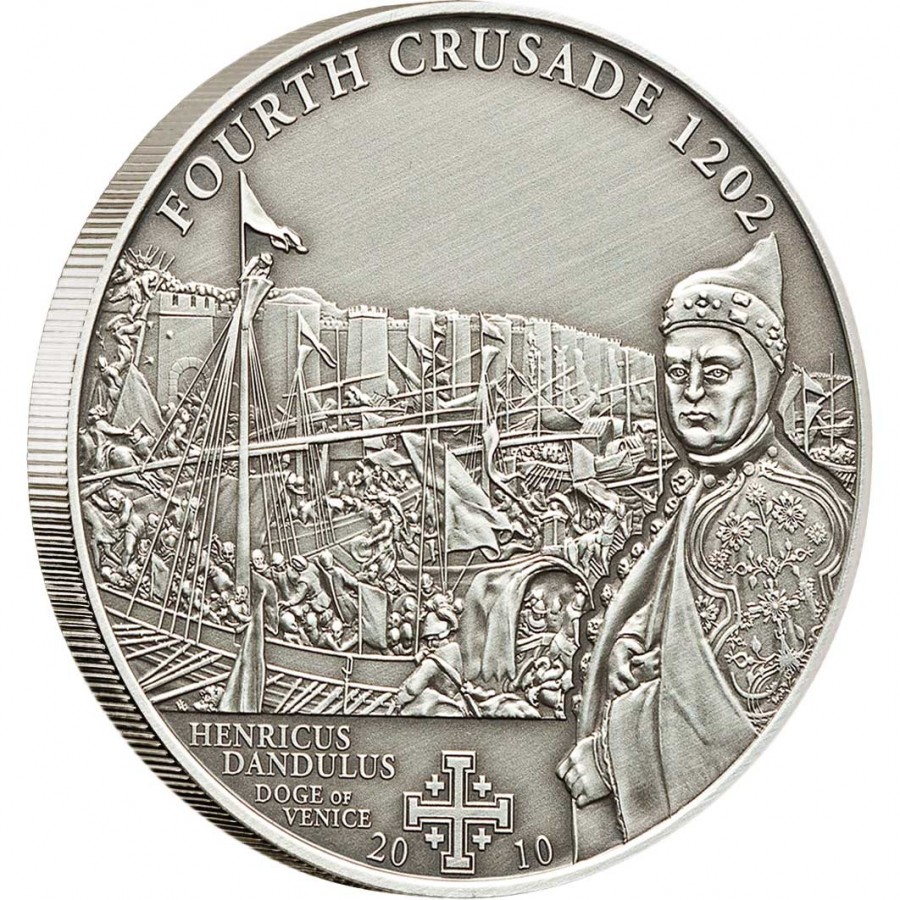
Mrs Walker wants to go to Venice this half-term, she says she wants to visit the islands. She needs someone to read her guide book from cover to cover to and seeing all of you are looking at your shoes and making yourselves purposely busy, it looks like it’s down to me again. I don’t read much at all but Mrs Walker does voraciously and I sleep with her. As a consequence of our planned sojourn, she is currently reading about the history of Venice during the Crusades.
Venice has always depended entirely on trade for its survival for obvious reasons. It enjoys a prime stategic position and has had a reputation for being ‘one-eyed’ in its dealing with the empires throughout history. One particular period that illustrates this well is at the end of the 1100s when it was being badly hurt by the embargo brought by the papal ban on trading with the islamic world after the capture of Jerusalem in the 12th century by Saladin. The merchants of Pisa and Genoa had continued to trade so Venice pleaded to Rome for the ban to be lifted to which Pope Innocent gave carefully worded concessions which excluded transaction in any war materials. ‘[We] prohibit you, under strict threat of anathema, to supply the Saracens by selling, giving or bartering, iron, hemp, sharp implements, inflammable materials, arms, galleys, sailing ships, or timbers’
So with trade continuing with the ‘enemy’, Venice also won the tender to supply the Christian military, being the ideal staging port for the 4th Crusade. They built horse transports to carry 4 500 horses and 9 000 squires. 4 500 knights and 20 000 foot soldiers were embarked on the port’s ships. The thoroughness of the Venetian workmen also provided provisions for this navy, both men and horses for nine months.The bill for this was 94 000 marks and they threw in 50 armed galleys, free of charge, as long as this alliance lasted,with the condition that the Venetians receive half of all conquests that the force make by way of territory or money, land or sea.
This committed the Venetians to the largest contract in medieval history.
Now, you tell me what has changed in the last 1 000 years!

Uri Geller, let’s be generous, the illusionist, once did a trick on a chat show where he invited a TV audience to go and search for that watch that hadn’t worked for ages. He exalted the compliant brethren to fetch and hold it in their hands to which he would send positive energy through the screen to restart the timepiece. Oh my word, oh my goodness, the switchboards were jammed with excited followers whose watch had come back to life after years of inaction in that drawer. It is a very improbable resurrection but Uri knows full well that firstly many people don’t throw away objects that have high sentimental attachment and secondly agitation or the warmth from a committed clenched hand can release a heart’s murmur of electricity from a dormant battery. To give him his due though, he takes the risk of reliance on others and exhibits considerable faith but the real credit for the trick should go to statistics in this case the size of the population that is taking part.
Infinite monkeys and typewriters mean anything can happen. The real beauty of probability is that if you give anything enough chance of happening, it’ll happen. That’s why we’re here. In this link to a lecture in 2010, ‘Statistically, you shouldn’t be here’ Bill Bryson talks about the 4 billion years of reproductive good fortune that had to happen for you just to exist.
You’re a miracle – or are you!
I’ve been boring my classes for years that you only need 30 or so people in a room to ensure two people have the same birthday, although ensure is not factually correct. With 30 people you have 435 ways of comparing two people’s birthday so I prefer to say 40 with 780 ways and I don’t end up with egg on my face when we try it. Yes there are 365 different possible birthdays but when you compensate that low chance of two being the same by having 780 goes, probability wins through. The chances of winning the lottery are 1 in 14 million but if you buy 14 million or more tickets!!?
But having the same birthday is boring, what other things could 40 odd random people have in common with each other that are simply unknown to us. Many years ago in Devon, a new secondary pupil in my class got talking to the boy sitting next to him. They discovered that they had unknowingly previously been in the same infants class in a small village in Scotland. (They were twins- no, I jest!) What’s the chance of something like that happening? – Well as it turns out, certain, if you think about it.
An amazing film which deals with this phenomenon. is Magnolia . At the start, we are told three true stories of unbelievable coincidences. (Everybody, in fact, has their own tales they can and do tell of such improbable circumstances.) The film unravels the narrative of a dozen or so poor souls whose suffering and interacting fortunes improve after a cataclysmic downpour of frogs. I’ve watched this film for years and it was only when I was reading the Imdb review did I become aware of the sublimal inclusion of the number 82, everywhere in the film by the director Paul Thomas Anderson. The number 82 refers to Exodus 8:2 which reads
“If you refuse to let them go, I will plague your whole country with frogs.”
But the irony personally for me continues. I was lying awake in bed that night thinking about this 82. This number rings a bell, where have I seen it before. I went downstairs and found the answer. I had been walking around for the last two years or so in a pair of single strap sandals with a basketball style 82 blazoned across them. What’s more is the colour of the strap, a lightish pink was ‘remarkably’ the same colour as the firefighter’s plane, but then I’m toying with you to emphasise my point. If 82 hadn’t have been on the sandal, it would have been somewhere else, an address on an envelope, a speeding fine or something else my radar was now programmed to look for.
Coincidences are the occasions that we notice. A gambler will only tell you of the times he wins. n (n – 1)/2 gives 780 just when n is 40, what do you think it gives for a million, billion, even a squillion? The human face has a limited number of features that vary, is it then so surprising or hard to accept that we will all have dopplegangers. Is it possible that life could be occurring elsewhere? The astronomically huge numbers say definitely so. Just think of it, thousands of planets with other monkeys, each one created by god, of course. That does mean that they all need and have saviours, presumably cousins of Jesus, as the original was an only child!
Thousands of years ago or indeed still today to people who want to believe it, a coincidence such as my sandal could only be explained as being a sign from god. The lord has spoken and sent us this sign. Well I’m afraid that’s rubbish. The monkeys now know too much to be frightened off by the belief that God is watching over us, responsible for everything and sending us the odd reminder of his omnipotence.

What causes delusion?
The prevailing view is that people adopt false beliefs because they’re too stupid or ignorant to grasp the truth. This may be true in some cases, but just as often the opposite is true: many delusions prey not on dim minds but on bright ones. And this has serious implications for education, society, and you personally.
In 2013 the Yale law professor Dan Kahan conducted experiments testing the effect of intelligence on ideological bias. In one study he scored people on intelligence using the “cognitive reflection test,” a task to measure a person’s reasoning ability. He found that liberals and conservatives scored roughly equally on average, but the highest scoring individuals in both groups were the most likely to display political bias when assessing the truth of various political statements.
In a further study (replicated here), Kahan and a team of researchers found that test subjects who scored highest in numeracy were better able to objectively evaluate statistical data when told it related to a skin rash treatment, but when the same data was presented as data regarding a polarizing subject—gun control—those who scored highest on numeracy actually exhibited the greatest bias.
The correlation between intelligence and ideological bias is robust, having been found in many other studies, such as Taber & Lodge (2006), Stanovich et al. (2012), and Joslyn & Haider-Markel (2014). These studies found stronger biases in clever people on both sides of the aisle, and since such biases are mutually contradictory, they can’t be a result of greater understanding. So what is it about intelligent people that makes them so prone to bias? To understand, we must consider what intelligence actually is.
In AI research there’s a concept called the “orthogonality thesis.” This is the idea that an intelligent agent can’t just be intelligent; it must be intelligent at something, because intelligence is nothing more than the effectiveness with which an agent pursues a goal. Rationality is intelligence in pursuit of objective truth, but intelligence can be used to pursue any number of other goals. And since the means by which the goal is selected is distinct from the means by which the goal is pursued, the intelligence with which the agent pursues its goal is no guarantee that the goal itself is intelligent.
As a case in point, human intelligence evolved less as a tool for pursuing objective truth than as a tool for pursuing personal well-being, tribal belonging, social status, and sex, and this often required the adoption of what I call “Fashionably Irrational Beliefs” (FIBs), which the brain has come to excel at.
An absurd ideological belief is a form of tribal signalling. It signifies that one considers their ideology more important than truth, reason, sanity. To one’s allies, this is an oath of unwavering loyalty. To one’s enemies, it is a threat display.3:08 PM ∙ Oct 16, 2021799Likes148Retweets
Since we’re a social species, it is intelligent for us to convince ourselves of irrational beliefs if holding those beliefs increases our status and well-being. Dan Kahan calls this behavior “identity-protective cognition” (IPC).
By engaging in IPC, people bind their intelligence to the service of evolutionary impulses, leveraging their logic and learning not to correct delusions but to justify them. Or as the novelist Saul Bellow put it, “a great deal of intelligence can be invested in ignorance when the need for illusion is deep.”
What this means is that, while unintelligent people are more easily misled by other people, intelligent people are more easily misled by themselves. They’re better at convincing themselves of things they want to believe rather than things that are actually true. This is why intelligent people tend to have stronger ideological biases; being better at reasoning makes them better at rationalizing.
When intelligent people affiliate themselves to ideology, their intellect ceases to guard against wishful thinking, and instead begins to fortify it, causing them to inadvertently mastermind their own delusion, and to very cleverly become stupid.9:45 PM ∙ Nov 9, 20183,388Likes1,084Retweets
This tendency is troublesome in individuals, but in groups it can prove disastrous, affecting the very structure and trajectory of society.
For centuries, elite academic institutions like Oxford and Harvard have been training their students to win arguments but not to discern truth, and in so doing, they’ve created a class of people highly skilled at motivated reasoning. The master-debaters that emerge from these institutions go on to become tomorrow’s elites—politicians, entertainers, and intellectuals.
Master-debaters are naturally drawn to areas where arguing well is more important than being correct—law, politics, media, and academia—and in these industries of pure theory, secluded from the real world, they use their powerful rhetorical skills to convince each other of FIBs. During their master-debatery circlejerks, the most fashionable delusions gradually spread from individuals to departments to institutions to societies.
Some of these FIBs can now be found everywhere. A particularly prominent example is wokeism, a popularized academic worldview that combines elements of conspiracy theory and moral panic. Wokeism seeks to portray racism, sexism, and transphobia as endemic to Western society, and to scapegoat these forms of discrimination on white people generally and straight white men specifically, who are believed to be secretly trying to enforce such bigotries to maintain their place at the top of a social hierarchy.
Naturally, woke intellectuals don’t consider themselves alarmists or conspiracy theorists; they believe their intelligence gives them the unique ability to glimpse a hidden world of prejudices. What they don’t know is that high IQ people and low IQ people display similar levels of prejudice, except toward different groups, and educated people actually display greater prejudice against those with different views.
Wokeism is mostly a prejudice of master-debaters and their followers because the idea that straight white men are bigots keeping down women and minorities requires a high degree of rationalization: one must uncritically accept the social disparities that favor men over women or whites over blacks as evidence of discrimination, while finding excuses to dismiss all the countervailing disparities.
For instance, if a wokeist wishes to use the overrepresentation of white men in STEM as evidence that women and minorities are being discriminated against, then the wokeist must either ignore or explain away the fact that Asian men are also overrepresented in STEM, or that women are overrepresented in the field of psychology, or that the biggest racial disparity of all is black men comprising less than 7% of the US population but holding over 70% of dream jobs playing in the NBA.
Not only does intelligence in the service of wokeism lead to one-sided readings of reality, it also leads to the production of pure fiction. The popular woke myth that sex is a spectrum is often justified on the basis that there’s no single thing that distinguishes all men from all women. Such an abstract explanation is seductive to an intellectual, but beneath the allure it’s just an instance of the univariate fallacy (it’s true that no single thing distinguishes all men from all women, but no single thing distinguishes all cats from all monkeys either; does this make cats monkeys?)
Labyrinthine sophistry like “sex is a spectrum” prevails among cognitively sophisticated cultural elites, including those who should know better such as biologists, but it’s rarer among the common people, who lack the capacity for mental gymnastics required to justify such elaborate delusions.
Despite being irrational, wokeism is nevertheless an intelligent worldview. It’s intelligent but not rational because its goal is not objective truth but social signaling, and in pursuing this goal it’s a powerful strategy. People who engage in woke rituals, such as proclaiming their pronouns during introductions, or capitalizing the word “black” but not the word “white,” signal to others that they’re clued-up, cosmopolitan, and compassionate toward society’s designated downtrodden. This makes them seem trustworthy and likable, and explains why wokeism is most prevalent in industries where status games and image are most important: politics, media, academia, entertainment, and advertising.
Wokeism is what happens when identity-protective cognition is allowed to run rampant through cultural institutions like Harvard and Hollywood. But while wokeism is currently systemic in the West, in the 1800s the dominant racial ideology in America was white supremacy. As a result, the master-debaters of that age often used their reasoning not to justify discrimination against whites but discrimination against blacks. An example would be the 19th century American physician Samuel Cartwright. A strong believer in slavery, he used his learning to avoid the clear and simple realization that slaves who tried to escape didn’t want to be slaves, and instead diagnosed them as suffering from a mental disorder he called drapetomania, which could be remedied by “whipping the devil” out of them. It’s an explanation so idiotic only an intellectual could think of it.
Cartwright’s case shows that the problem of runaway rationalization is not just a disorder of today’s woke intellectuals, but of educated people of any persuasion and any time. And that includes you. Since you’re reading about intelligence right now, you’re likely above average in intelligence, which means that you, whatever you believe, should be extra vigilant against your intellect being commandeered by your animal impulses.
But how does one do that, exactly? How does an intelligent person avoid a disorder that preys specifically on intelligence?
The standard rationalist path is to try to avoid delusion by learning about cognitive biases and logical fallacies, but this can be counterproductive. Research suggests that teaching people about misinformation often just causes them to dismiss facts they don’t like as misinformation, while teaching them logic often results in them applying that logic selectively to justify whatever they want to believe.
Such outcomes make sense; if knowledge and reasoning are the tools by which intelligent people fool themselves, then giving them more knowledge and reasoning only makes them better at fooling themselves.
I’ve been tweeting about irrationality since 2017, and in that time I’ve noticed a disturbing pattern. Whenever I post of a cognitive bias or logical fallacy, my replies are soon invaded by leftists claiming it explains rightist beliefs, and by rightists claiming it explains leftist beliefs. In no cases will someone claim it explains their own beliefs. I’m likely guilty of this too; it feels effortless to diagnose others with biases and fallacies, but excruciatingly hard to diagnose oneself. As the famed decision theorist Daniel Kahneman quipped, “I’ve studied cognitive biases my whole life and I’m no better at avoiding them.”
This is not to say that education is futile. Knowledge can help to limit motivated reasoning—but only if it’s accompanied by a far deeper kind of growth: that of one’s character.
Motivated reasoning occurs when we place our intelligence and learning into the service of irrational goals. The root of the problem is therefore not our intelligence or learning, but our goals. Most goals of thinking are not to reach objective truth but to justify what we wish to believe. There is only one thing that can motivate us to put our intelligence into the service of objective truth, and that is curiosity. It was curiosity that was found by Kahan’s research to be the strongest countermeasure against bias.
But how do we make ourselves curious? Is it even possible?
Good news: if you’re reading this, you’re probably quite curious already. But there’s something you can do to supercharge your curiosity: enter the curiosity zone. Basically, curiosity is the desire to fill gaps in knowledge. As such, curiosity occurs not when you know nothing about something but when you know a bit about it. So learn a little about as much as you can, and this will create “itches” that will spur you to learn even more.
Curiosity is essential to directing your intellect toward objective truth, but it’s not all you need. You must also have humility. This is because the source of our strongest biases is our ego; we often base our self-worth on being intelligent and being right, and this makes us not want to admit when we get things wrong, or to change our mind. And so, in order to protect our chosen identity, we stay wrong.
The greatest enemy of truth is the desire to win arguments.11:26 PM ∙ Jul 14, 20182,153Likes541Retweets
If you define your self-worth by your ability to reason—if you cling to the identity of a master-debater—then admitting to being wrong will hurt you, and you’ll do all you can to avoid it, which will stop you learning. So instead of defining yourself by your ability to reason, define yourself by your willingness to learn. Then admitting you’re wrong, instead of feeling like an attack, will become an opportunity for growth.
Anyone who’s sure they’re humble is probably not, so I can’t say whether I’ve succeeded in becoming humble. But I can say that I always try to be humble. And, well, there’s little difference between trying to be humble and actually being so.
For me, trying to be humble entails the constant interrogation of my own motives. Could my most cherished belief be a FIB? Why do I really believe what I believe? What other reasons beside reason could I have? My self-questioning makes me agonize over every word I write, but in the long term my hesitancy gives me confidence, for by being careful about what I think I develop trust in my thoughts.
Humility and curiosity, then, are what we most need to find truth. By seeking one we also seek the other: being curious makes us humble, because it shows us how little we know, and in turn, being humble makes us curious, because it helps us acknowledge that we need to learn more.
In the end, rationality is not about intelligence but about character. Without the right personal qualities, education and IQ won’t make you a master of your biases, they’ll only make you a better servant of them. So be open to the possibility that you may be wrong, and always be willing to change your mind—especially if you’re smart. By being humble and curious you may not win many arguments, but it won’t matter, for even losing arguments will become a victory that moves you toward the far grander prize of truth.
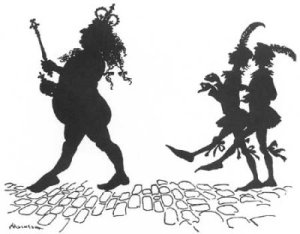
‘Civilised life is based on a huge number of illusions in which we all collaborate willingly. The trouble is, we forget after a while that they are illusions and we are deeply shocked when reality is torn down around us.’ J. G. Ballard
The child who cries out when the Emperor parades, “but he isn’t wearing anything at all”, must qualify as one of life’s most courageous whistleblowers.
The fable of The Emperor’s New Clothes dates way back before the Danish author HCA caused it to be translated into over 100 languages. Medieval Spain, Persia and Germany are amongst many countries that have versions of the story. In 1052 India the Nirvāṇalīlāvatī by Jineśvara depicts the same tale where a dishonest merchant Dhana from Hastināpura swindles the King of Śrāvastī by offering to weave a supernatural garment that cannot be seen or touched by any person of illegitimate birth. When the king is supposedly wearing the garment, his whole court pretends to admire it.
The reason why it has always existed is because it’s an illustration of a human condition called pluralistic ignorance in which a majority of group members privately reject a norm, but incorrectly assume that most others accept it, and therefore go along with it. This is also described as “no one believes, but everyone thinks that everyone believes”. In short, pluralistic ignorance is a bias about a social group, held by that social group. It helps to explain the bystander effect – that is if no-one acts, onlookers may believe others believe action is incorrect, and may therefore themselves refrain from acting. We don’t have to go any further than the Weinstein affair as an example. Everybody in Hollywood, including Meryl Streep and Dame Judi, knew about his sexual proclivities before the floodgates of condemnation sprang open accompanied by the unanimous jumping of ships.
There are many cases of mass duplicity, often involving some nationalistic ceremony, that might be just as ably punctured by a Harpo Marx type bulbhorn. Can you imagine what would happen to an individual challenging a North Korean military parade or the religious sanctity of a Pope’s coronation? We could however sound the horn to our politicians as an alternative to an individual having or daring to say what we all know, – “You’re fucking lying.”
Worryingly, many people are starting to credit Trump for some minor positive consequences of disturbing the political flux by his disruptive interventions. He is only the child and really we all should realise the stunning absurdity of our world and the extent to which pluralistic ignorance essentially keeps it all in place.
Twenty years ago, we arrived in Woolacombe with our two little boys, having survived 15% interest rates and negative equity from our one and only house in Steeple Claydon. We had nothing and I was 40. A woman overheard us talking on the beach that we couldn’t find anywhere to live and led us to view a studio flat, opposite Marisco’s disco, that we subsequently rented for 6 months.
Harry, in a confused state and with an anxiety patch on his arm, on going to the launderette, asked if this was our new home. In fact, after we had taken him to the doctor’s about a minor fall, we had a visit from the social services! I took Jack for a visit to this wonderful school in such an idyllic beautiful setting, thinking there’s no way they’ll take someone out of the area. Inexplicably, he crawled under the headmistress’s desk and refused to come out while I was trying to convince her that he would be an asset to the school. Anyway, I think the boys made a better impression when Kris Winthorpe, the Year 1 teacher, came round for a home baseline visit and found a 3 year old and a 5 year old playing chess! To this day, I amuse myself that we rigged it. “OK, places everyone. Now remember your lines boys. Jack, you start with,’…aah I see you’ve employed the old Sicilian defense opening with the Scheveningen variation’. Harry, you push the pointy black one forward and don’t eat it this time”
Slowly and happily, we established ourselves. I had some business cards printed which I took round local schools, hoping to get some supply work, – John Walker B Ed (Hons) – ‘Have chalk, will talk’ ! A morning’s work here, a couple of days there. Meanwhile we soon came to end of our 6 month tenure and beachlady wanted us out. More anxiety pains. Cue Romy to talk to the local greengrocer who knows of a small flat in Lee. The elderly neighbours are initially wary of a couple with two noisy youngsters but it’s the start of us living at the Grange. After a while, Jill Beaumont, the owner inquires, if we are interested in buying the 3 bed-roomed wing of the Grange in which she lives. We tell her that, because neither of us have a permanent contract, we can’t see us getting a mortgage seeing how the housing market had just come out of a crisis where everyone had stretched themselves too much. She said nonsense, persuaded us to do it and the rest is history.
Fast forward twenty wonderful years of happiness to now. We are leaving our beautiful home in paradise because we love it so much. We can’t stay because we would sentimentally drown in blissful memories. I come from Ipswich, Suffolk and Romy from Tewkesbury but our boys come from a small village called Lee. “Have you heard of Woolacombe? – Well, it’s near there.”
Basically, we are very very sad to leave. We may come to our senses, and like Jerry, come back home from Bristol with our tails between our legs but until then goodbye and love to all our friends.
Richard’s Memories of Mum
To say that my mother was devoted to my father would be an understatement. Not only did she love, honour and obey him, as was the custom for her generation, but she also worshipped the ground he walked on. Her marriage was one of three things that defined her life, the other two being her children and the long years of widowhood that followed Dad’s untimely passing.
Mum and Dad’s marriage was a good one. They hardly ever quarreled, and when they did it was always about money, or, to be more precise, the dire lack of it. Dad always had a steady job, but he was by no means well paid for a man of his ability and experience. I know this because when I was 19 years old I was offered a trainee managerial position at the local yeast factory. I told Dad the salary they were offering and asked him what I should do. He said, “Son, that’s almost as much as I make, I’d take it if I were you.”. He was then a supply supervisor at Levington research station, and approaching retirement with over 20 years service to his company. Clearly, they did not pay him very well.
To make ends meet, Mum had to work part-time in addition to her traditional housekeeping role, and Dad had an evening job a few nights a week. It must have been hard for them both, but especially for Mum. Sometimes the housekeeping money ran out before the next family allowance could be drawn at the post office. When that happened we ate a lot of Irish stew, made with meat that was barely fit for human consumption, and seemingly endless plates of baked beans on toast… not Heinz baked beans, mind you… oh no, I’m talking about some seriously cheap and nasty baked beans here!
On one of these occasions… I was perhaps 8 or 9 years old at the time… I decided to take matters into my own hands. I went down to the seafront to look for returnable bottles in the promenade litter bins, and coins dropped by holiday-makers on the pebble beach. Amazingly, I found some of both, as well as a gold ring bearing the inscription “In thee we trust”. I returned home with my treasure and gave it to Mum saying, “Here, Mummy, we can buy some food with this.” She hugged and kissed me with tears in her eyes… just as there are tears in my eyes as I write this… because she knew that I loved her and wanted to help.
On another occasion a few years later, Mum and Dad had a terrible row about money, and I was sure she was going to leave him. We were living at 6 Sea Road by then, so I must have been about 12 years old. I said to John, “We’ve got to do something to make her happy.” So we cleaned the kitchen from top to bottom while she was at work. More tears of joy when she got home. I was very pleased with myself for saving their marriage.
Mum and Dad were good parents. Despite the lack of money, they were determined that we, their children, would have all the opportunities that they were deprived of. To that end, we all received a private education that they really could not afford, and in my case, because I was lazier and less inclined to study than Peter, they even hired a private tutor to get me through the Eleven Plus examination. That is how important they viewed the education of their children. They also made sure that the whole family went on holiday every summer. They were great holidays for us kids, but lots of work for Mum and Dad. I’m sure they must have been more exhausted than refreshed by these “breaks” from mundane working life. We were all loved and treated equally, especially by Mum, for whom this was a principle close to her own heart. The fact that we have all led useful, productive and happy lives is due primarily to the dutiful and self-sacrificing parenting that we received from them.
Dad’s passing while Mum was still in her late fifties was a terrible blow for her to bear. I once said to her that I would be totally okay with her finding a new partner. “Oh, no”, she said, “I couldn’t possibly do that to your father.” In accordance with her wishes, her ashes are to be placed as close as possible to his, because she loved him and missed him to the very end of her life. Sally, God bless her, more than anyone else, made those long lonely years bearable for Mum. We, her brothers, owe her much for being such a wonderful daughter. You are just like Mum, Sally, thank you for all you have done. I know that Dad would say the same.
There is much more that I remember… too much to tell on this occasion, but I’m sure others will remember too. Audrey Walker was a fine woman and the best mother a man could wish for. If Terry Wogan had been her son, he would have been a very lucky man. And she really didn’t care much for Terry Wogan…. nobody knows why! She deserved so much more than she got from life. Hopefully, I am wrong about what lies beyond the grave, and she is now reunited with the man she loved so dearly. She definitely deserves that.
Greetings to you all from Canada. I deeply regret that I am not able to be with you today. I know what Mum would say, “Oh, Richard, really!” And she’d be right, of course. But I know in my heart that she would forgive me, because I know she loved me and always forgave me for being her wayward son. I hope that we will be able to arrange a family reunion in the not-to-distant future, because I also know that, above all else, that is what she wanted.
Sally’s Memories of Mum
What can I say about Mum. She was my world. She’s been there for me all of my life and now there is an emptiness I cannot describe.
Although she was a trained secretary, from the time I was born until I started school, Mum worked as a nursing auxiliary. She worked nights so that she could be at home with me during the day. Her uniform I remember was pink stripes with a button on the collar, starched white hat and apron. To a five year old she looked very grand and I was so proud to tell my friends at school, ‘my mum’s a nurse.’ Seeing her in that uniform, from then on I knew I wanted to follow in her footsteps. I have now been nursing for 36 years.
At the age of 6, Mum taught me to knot and sew, a hobby I still do today. an asset I am deeply indebted to her for as I am able to make my daughter Francesca’s costumes for her theatrical performances.
Mum never learnt to drive, never wanted to either! The thought of driving frightened the life out of her. Dad tried to teach her once…. not a good idea. Frustration on Dad’s part and fear on Mum’s was not a good combination, so that was that. We kept up to our name and walked everywhere! We lived by the sea in Felixstowe, Suffolk. Our flat was a stone’s throw from the promenade. All of us siblings spent most of our time on the beach. Me playing with my friends from dawn to dusk and the boys working as deckchair attendants all through the summer. Peter and John also worked at our local theatre in the evenings as stagehands and Richard for a short while worked at the theatre car park. I do recall Mum commenting once on the fact that we treated home as a hotel….we only came home to eat and sleep! Yet she was content in our happiness.
As children, the seaside was all that we knew. We had daily long walks along the prom with our dog, evening paddles in the sea by moonlight and not forgetting the Christmas family walk along the prom to digest our dinner before round 2 with the evening festive eats.
I do remember when I was about 7 years old, I had a cold one Christmas. Snuffling and coughing, I was eager to open my Christmas presents. It came to the present from my maternal grandmother. I opened it to see the mortified look on Mum’s face to see that her mother had given me a packet of Lemsip and a string bag of oranges. Mum soon after bought me another present to compensate!
I was always close to Mum, being her only daughter but more so after Dad died in 1983. Suffolk held too many memories for her so she moved to be near me. Mum quickly learnt to live an independent life. She went on her annual holidays to Scotland with her friend Jean and coach trips back to Felixstowe to see her cousin Pauline. Even up until her mid-80’s, she would go shopping on the bus to Basingstoke and Reading. But I think the highlight was on her 90th birthday when the whole family were together again. We had lunch in Winchester where she walked the length of the high street, up and down the hill with her rollator only for help.
Although her illness these last few months was only very brief, mum wanted her independence and to stay in her home almost up to the end. She did this with the dedicated care and patience of the palliative care team nurses. They looked after her at home and she thought they were wonderful. Their experience showed when the time for mum to go to Ashbourne Court was needed. Although only a very short stay where she died peacefully, their care and compassion was second to none.
I found recently a poem in the pocket of my mother’s handbag. It reads:
When I must leave you for a little while,
Please do not grieve and shed wild tears
And hug your sorrow to you through the years,
But start out bravely with a gallant smile;
And for my sake and in my name,
Live on and do all things the same.
Feed not your loneliness on empty days,
but fill each wakening hour in useful ways.
Reach out your hand in comfort and in cheer
And I in turn will comfort you and hold you near;
And never be afraid to die,
For I am waiting for you in the sky.
Be happy Mum. I am proud and privileged to have known and loved you. Treasured memories until we meet again.
John’s Memories of Mum
This will be very random and personal as I try to draw together remaining fragments of memories and lasting thoughts of Mum. We have a problem because it is hard to remember things that happened 30 years ago and if you subtract 30 from 92 you’re left with 62 so many of our best recollections of Mum will be sadly of her as old.
I once had to give an assembly. If 2 or 3 hundred young people are going to gather to hear you speak, you should really choose a subject that’s important, that you believe in. The subject of my pearls of wisdom was ‘Heroes’. With a huge screen behind me and a wireless mouse, I proceeded to reveal four examples. Bjorn Borg – incredibly captivating winning consecutive titles with such panache. Nick Park – quiet reserved genius creator of Wallace and Gromit who when interviewed about the fire at the Aardvark Bristol studios that had destroyed most of the production’s history commented, “Well compared with the earthquake that has just happened in Pakistan, it all puts things into perspective.” Ken Beevers – Jack’s football coach who as a 60 year old saw this age group being disbanded through a lack of a coach. Already retired and done his ‘stint’, he had the attitude that this cannot be let to happen.’ Volunteers and community-centred people who are the backbone of society. ….. and last but not least ..my Mum. Four children in a small basement flat. No modern washing machine, tumble drier, microwave. A kitchen about the size of walk-in cupboard which up to 10:30pm never closed. We never saw mum. She never watched telly with us – too busy. Three boys playing football getting mud all over school trousers. “Mum, my rugby shorts are still damp!” – “John, John – It’s half past seven, I’ve overslept and you’re late for your paper round. Tell them it’s my fault.” – “No mum.” – The point I was trying to make to young people, was that if you’re looking for heroes, sometimes they’re right under your nose!
Mum lived solely for her children. At the height of this nasty infection that covered half her face and led to paulsey about two months before her death, she used to take about an hour to go to the toilet, one shuffle after another and crawl into bed, exhausted with the effort and concentration to do the simple things that we take for granted. On one of these occasions after I had put out her bedside light, all she could think of was, “Oh John, you won’t be able to see your way out of the room with the light off” – “I’ll manage Mum”
I’ve thought for years what I would like to say at my son Jack or Harry’s wedding. Seeing thankfully that is the privilege of the bride’s father, I’ll say it now. Jack – Harry – Your mother Romy and I have a wedding present for you both but you can’t wrap it up and you can’t see it. It’s 33 years of love and devoted partnership providing a safe and secure home. So when you read your cards that wish you a happy marriage together, I’d like to think that it won’t be entirely down to chance. Because that’s what my Mum and Dad gave to me. I was dealt a very good hand and I know it and I appreciate it. It’s not only your hairline, eye colour or medical conditions that you inherit from your parents. We may have survived on soup and dumplings but money is insignificant to the loving happy childhood we all had. Just finishing my fantasy, at the end of my rousing speech, Jack turns to me and says, ‘ Yeh, pretty words Dad, now give us the toaster, you cheapskate! (But he doesn’t though)
What a legacy though. Looking at these old photos which I haven’t seen for so long, we were a lovely family. And guess what lovely people beget lovely people. I’ve stood in the away football supporters section of my fellow suffolk countryman and I have witnessed the full spectrum of humanity and our family tree compares very favourably. Perhaps we owe a debt of gratitude to our grandparents too. – Naaah! The Victorians were very good for beards, railways and sewers but pretty useless at parenting skills. Churchill’s grandchild is said to have put his head round his drawing room’s door, and asked, “Is it true, grandad that you are the most famous man in England?” – “Yes, replied Churchill, now bugger off!!” Well that was just about what it was like for us. Children should be seen and not heard! Sorry Mum and Aunty Brenda. Only speaking as grandchildren, mind, the legacy starts with Mum and Dad.
If you were to ask me what is the ‘Rosebud’ memory of my childhood, it would be ….potatoes!! Mum never peeled enough potatoes. It’s where I learnt to divide. She brought them to the table, mumbling away that she didn’t know if she had done enough potatoes. Now let me see, 2o to go between 6 people. A quick scan around the table to see who’s paying attention, I reckon I could get away with helping myself to four here! We used to have a sack of potatoes in our shed which is also where we kept the paraffin for the heaters. One day, the potatoes tasted very strange. I complained to mum but she concealed the fact that she could taste any difference. (But Mum, look…you can actually light them!!) We ate those strangely flavoured potatoes because to discard them would have been a waste. They didn’t do me any harm.
This is Mum in Winchester hospital after Sally had done such a great job nursing her face back to normal. I took this film to show Sally how the paulsey was causing her to miss her mouth! As it was, she fully recovered and here’s the proof. When she came back from her CT scan, which was how they discovered the three tumours, she was babbling in tongues and did not know who I was. I was unaware, then, that the radiocontrast agents causes such an effect on the brain. I was very upset. I thought that this was it and so sad because Sally was not there due to having to work. After leaving her to eat, I returned and was determined to tell her that I loved her, just in case she was in any doubt. But, we’re a team and so I took her hand and said, “Mum, Peter, Richard, John and Sally, we all love you so very much.” And not thinking that I would get any coherent sense from her, she replied through her haze, “I know dear.” That, just about dots every i and crosses every t. Sleep peacefully, Dearest mummy.

In this country, a significant proportion of the electorate tend to default their vote for the male, poshly spoken, suit-wearing Conservative stereotype on the premise that they can probably add up better and they know what’s best for us. After all, all our headmasters, politicians, business leaders all wear suits. All our bosses who speak with such authority on their own merit and decide if we have a job or not have had a university education and even our generals join our royals in speaking with a plum in their mouth. The Tory party indoctrinates, “We’re the best people to trust with the economy, we’re the party of business. Don’t worry your little head, vote for us and know the cuts, the austerity, the wage controls, the drawing back of the welfare state are all in your interest.” Social justification does the rest; that is the poorest who have most to lose, cover for them upstairs because they are in hock to them. If you’re stupid enough not to heed our words, you’ll get Corbyn in charge and you don’t want that, do you? Him and his 2 Es at university. No contest when you think our girl Theresa May went to Oxford.
Then you get an insight into whether this makes for good leadership. Nick Clegg revealed this week that during his time in cabinet, he cannot record one instance of Theresa May having and voicing an opinion on anything. This backs up the country’s experience during this campaign in which we continued to learn nothing of her views on Brexit or any policy whatsoever. This straight bat, uninspiring stonewalling character has been supposedly heralded as Strong and Stable. Strong and Stable like a concrete wall. She may have studied hard and been assiduous in working through her red box but this is not intelligent leadership.
Intelligence and knowledge are two different things. Even if someone is not exactly what we’d call “book smart,” it doesn’t mean that they’re not intelligent. We call book smart someone who is educated either in school/university or by studying and learning by themselves through educational activities such as books, documentaries, and various courses. Book smarts are usually reasonably intelligent. That’s because no one could learn and understand without a particular amount of intelligence. However book smart people as they pass through their academic portals tend to be comformists as they increasingly become members of elite coteries.
If you meet someone who is not book smart, don’t be quick to assume that they’re of lower intelligence. A lot of people who have not had many academic opportunities have high intelligence despite that they’re not book smart. Because intelligence is a trait, we are born with, as a part our genetic makeup. Our IQ is a measurement of our intelligence and doesn’t change, but can only develop to a certain extent. Your intelligence level can apply to a mixture of kinds of intelligence; some of us are good at maths, some can relate well to others, and some of us can do both with the same success. That doesn’t have anything to do with education. It’s natural. Education can only help you develop what you already have. Conversely, being educated to a high level doesn’t necessarily guarantee an exceptionally high IQ.
So what are the differences between book smarts and other intelligent people?
Book smart people are often found to be educated to a high level and have usually studied hard to reach their level of knowledge. They can list facts and data and have a lot of general knowledge. It makes them ‘intellectual’. When making decisions, book smart people tend to follow others’ ideas and experiences and rely on tried and tested strategies. Other intelligent people have not been educated to a higher level instead being sometimes street smart because they have learned from experiences rather than books. Other intelligent people use their instincts more when they want to make decisions, being often creatively smart, they look for alternative ways of doing things rather than relying on ‘god given’ rules.
To Jacob Rees-Mogg, if you’re not book smart, you’re trash! In fact, the perpetuated system we find ourselves in, dismisses a huge proportion of the population through still judging an individual’s worth by how they fare at our school’s academic curriculum. It’s such a very limited test of a person’s capabilities and does such untold damage to the self-confidence of those that are not book smart. “…….But if you judge a fish on its ability to climb a tree, it will live its whole life believing it is stupid.” – The stamp stays with us all our life and it really shouldn’t.
So, what’s the answer to choosing the right leader? Well look at the individual, not the resume. In this case that would be Corbyn, every day of the week and twice on a Sunday. It’s obvious isn’t it, comparing the two on their performance over the last two months? No – Can’t see it! – What’s the matter with you, are you stupid or what?
Hi Brenda, Michael, Nigel, Clive and Christopher.
Here is some film of when we holidayed together 54 years ago! Enjoy

 A Monkey in Manhattan