A Monkey in Manhattan
This ape's thinking has evolved sufficiently to know that this is all there is.
You can scroll the shelf using ← and → keys
You can scroll the shelf using ← and → keys
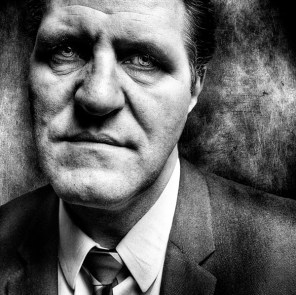
Dean Burnett is a doctor of neuroscience at Cardiff University working in the Institute of Psychological Medicine and Clinical Neurosciences. He is also a part-time stand-up comedian and science writer for The Guardian. In this extract, he explains the importance of laughter and the consequences of when telling a bad joke goes wrong.
Despite us not being exactly sure why we humans laugh, we all like jokes. However, different people are amused by different things. Same goes for music, food, fashion, holidays, and so on. Everyone’s different, it would be a tedious world where we all agreed on everything all the time. But one surprising occurrence is just how dramatic the reaction can be when a joke goes down badly, or falls flat. Nearly every comedian has a horror story about a hostile reaction from a crowd when a bit didn’t go over very well (I myself have an anthology of such anecdotes). And consider how quick people are these days to openly and vocally lambast a new sitcom if, in the space of a single debut episode, it has the audacity to be anything less than the pinnacle of all merriment.
It’s not that jokes and comedy are unique in prompting negative responses; criticism of albums, performances, books, films, paintings etc. aren’t at all unusual. But humour that doesn’t resonate with people does seem to provoke a more visceral, hostile response than other attempts at entertainment. Someone doesn’t like jazz, they’re likely to say it’s “not their thing”, but a comedian says a joke they don’t like and they may well yell “YOU’RE SH*T!” directly at them. Compared to other forms of entertainment and expression, jokes get much shorter-shrift when they fail. Why?
One explanation is that expectation is a big part of why we laugh. Many theories around humour and laughter point at expectations being altered or twisted. A distorted version of a plausible event is presented in your typical joke, and this renders our usual expectations irrelevant, which in turn creates uncertainty, producing a sense of tension in our brain. “Why would a horse walk into a bar? How can a man feel like a pair of curtains? Why would a chicken even be at a road in the first place? WHAT’S GOING TO HAPPEN!?!?” All this creates a sort of ‘psychic tension’, or cognitive stress, which is released when the punchline is revealed. This causes a sense of relief and pleasure, which is why we laugh, and enjoy doing so.
That’s one theory anyway. But thwarted expectations can be bad for joke tellers. The rhythms and structure of joke telling are pretty deeply ingrained in humans, so much so that even deaf people follow the same joke-telling rhythms of pauses and punchlines. This is important because deaf people, communicating in entirely visual ways, don’t risk disrupting the joke teller by laughing over the setups and details. But still, they don’t do that. Bottom line, we all know how jokes work, we obey the structure, and we expect to laugh at the end.
So, if we’re told a joke, and it’s so bad we don’t laugh, it’s not just disappointment we experience. We’ve been denied a reward, at the neurological level. Our brains were expecting pleasure, didn’t get it, and now we feel thwarted, cheated, angry. Hence, jokes that flop are infuriating.
But there’s also the social aspect of laughter and humour. It’s a very open, public thing, to laugh. It’s believed to have evolved to strengthen bonds between people, enhance group cohesion, and so on. You’re 30 times more likely to laugh as part of a group than you are alone. Normally this is all good, but humans aren’t necessarily egalitarian. We’re always trying to be liked, be accepted by others, to one-up each other, be the best or dominant one in our select group. Humour and laughter plays into this, especially for men it seems. We often laugh at people to show our ‘dominance’, to elevate our social status above theirs. So when someone tells you a joke, even if it’s not at your expense, you may subconsciously recognise that they’re trying to elevate themselves above you in the social hierarchy. Particularly if they’re a stand-up, in front of an audience, effectively controlling them.
And then the joke flops. At the subconscious level, this means several things. Someone’s tried to manipulate you, and failed. Someone’s tried to make themselves socially superior to you, and failed. Someone’s promised you laughter, a reward, and they haven’t delivered. Someone’s assumed your tastes and humour will be satisfied by their joke, and got it spectacularly wrong. This is, essentially, insulting and criticising the joke receiver in multiple ways. And this makes us, among other things, angry. So it turns out that telling a bad joke is indeed a high-risk venture.
Still, you’ve got to laugh haven’t you.

 The Honours System – how does this continue to exist, how on earth is this still a thing?! It defies a defence.
What a honour to receive a knighthood, you might think and in some ways you might be right. Did you know though that the knights, Alex Ferguson, David Attenborough et al are only what’s called Bachelor Knights. It is a notable acknowledgement of their achievements but is considered the most basic and lowest rank of a man who has been knighted by the monarch and rank far below knights of the various orders of chivalry. A sort of ‘undergraduate’ if you will! This has got everything to do with precedence, bloodline and keeping the power status quo as it is; if we were talking of inequities in taxation, education, the law or any other aspect of our constitution, we would be scrutinizing and questioning it far more.
Let me describe how I feel this honeynest works, starting with how it began
Left alone, with no interference, an agrarian society works like this. Farmers take their fish, goat or lentils to market together with say, cotton for textiles and sesamum for oil-making. Builders quarry local stone, miners excavate ore, prospectors extract gold and woodman fell trees for artisans to sculpt, carve, forge and cast. Localised trading continues as thus, unchanged, unfettered, unashamed.
Then your planners, politicians, entrepreneurs and engineers come along and decide to develop your roads, canals and riverways to connect to other markets of goat, mutton, ivory and bronze. Other cities or lands bring cultural development of joined up taxed thinking in the way of government providing gymnasiums, theatres, infirmaries for healthcare of mind and body, housing and sanitation, a police force to deal with inequities that arise and an army of ‘rabble’ and elite soldiers to defend what you’ve worked hard to produce. Everybody benefits.
Then your elders, leaders, chiefs decide, fuck this co-operative shit stuff, how can I hold on to this power and pass it on, unearned, to my bloodline. Well, see that land up to the mountains, including that river, forest and farmland, I’m now calling it Monarchyland and guess what I’m King, this is our flag and this our anthem and you, you and you can be my kiss-arse dukes. You can be an earl, you can be a prince and you’ve worked very hard for my cause, so I’m going to bestow on you a Knights Bachelor; now fuck off and sit at the bottom of the table with the arse-licking CBEs, OBEs and those fucking do-gooders MBEs. (Their thoughts, not mine, mind). Any critic or body who questions this is simply a traitor. And so it goes on, the theft of wealth (colonisation), the absolute strangulation of meritocracy (class system) and the retention of power (nepotistic oligarchy)
The poor are poor because the rich are rich, they are indisputably connected. The honours system is a tip for the poor, a ticket for the useful compliant low-level aspirant to sit at the table and an inducement for the rich and influential to keep quiet and acquire some patronage. Consider these two principled men who are brave enough to swim against that considerable tide.
Howard Gayle, the first black footballer to play for Liverpool turned down an MBE nomination, saying it would be “a betrayal” to Africans who suffered at the hands of the British Empire. He added,
“Most of you are aware of the work that I do tackling racism and the work I do for Show Racism A Red Card and for that work yesterday I was nominated for a MBE. Unfortunately I had to decline the nomination for the reason that my ancestors would be turning in their graves after how Empire and Colonialism had enslaved them. This is a decision that I have had to make and there will be others who may feel different and would enjoy the attraction of being a Member of the British Empire and those 3 letters after their name, but I feel that it would be a betrayal to all of the Africans who have lost their lives, or who have suffered as a result of Empire.”
Hillsborough campaigner Phil Scraton has just refused an OBE.
“I could not receive an honour on the recommendation of those who remained unresponsive to the determined efforts of bereaved families and survivors to secure truth and justice. I know this might come as a disappointment to some Hillsborough families, survivors and whoever nominated me, however, I could not accept an honour tied in name to the ‘British Empire’. In my scholarship and teaching I remain a strong critic of the historical, cultural and political contexts of imperialism and their international legacy.”
I feel really sad at the death of George Michael; by all accounts it seems he was an extremely generous, loving and talented man who tragically died too young. Same goes for Carrie Fisher. My frustration is always that the general public are unaware and are kept suitably unappreciative of the heroes and great people who give with their lives, every day , and live right under their noses. It’s easy to do a lot for charity when you’re rich, it’s when you do it when you’re poor, it’s impressive.
AA Gill, the award-winning writer and provocative television and restaurant critic, has died at the age of 62, less than a month after revealing he was seriously ill with cancer. Here in this brilliant article he illuminates what’s wrong with our Downtown Abbey land mentality and how it’s holding us back.
Paul Nuttall has just been elected the leader of UKIP (Nov 2016). In 2013 on warning about the impending flood of Romanian and Bulgarian immigrants to the UK, Nuttall stated:
“Bulgarians need to ensure that the brightest and best people stay in Bulgaria and make it economically prosperous instead of coming to the UK to make tea and coffee”
This was the Stewart Lee’s brilliant response to that view of immigration.
Leonard Cohen wrote songs on themes of war, politics and social justice. He was prone to depression and spent most of the 1990s in retreat at a Zen Buddhist centre in California. On hearing that Donald Trump had been elected President, he passed away. His last words were “Well, that’s me done- happy to go now!” (Not true)
He was Romy’s favourite. She told me this romantic story about his love Marianne with whom, in 1960, he rented an apartment on a small greek island called Hydra. (This island was the first place we ever went to as a courting couple). The song “So Long, Marianne” was written to and about her. Their relationship lasted for most of the 1960s.
In July this year, when he heard that she was near to death, he wrote to her and the farewell letter was read out at her funeral, stating “Well Marianne, it’s come to this time when we are really so old and our bodies are falling apart and I think I will follow you very soon. Know that I am so close behind you that if you stretch out your hand, I think you can reach mine.”
The world doesn’t work in straight lines anymore. HyperNormalisation contains a lot of persuasive imagery inclining you to adopt the usual conspiratorial stance about the superpowers’ strategems. Nevertheless it gives a convincing argument and explanation why the world’s gone fucking nuts!
“I followed a golden rule, whenever a new observation or thought came across me, which was opposed to my general results, to make a memorandum of it without fail and at once; for I had found by experience that such facts and thoughts were far more apt to escape from the memory than favourable ones.”
Charles Darwin
Most of us are shamelessly and ubiquitously only alert for evidence to support our underlying views and prejudices and dismissive of opinions and testimony contrary to them.
Eritis sicut Deus, scientes bonum et malum
In the day ye eat thereof, then your eyes shall be opened, and ye shall be as gods, knowing good and evil’
I’ve been researching war records for background information for a character for a book. I’m interested in the feared Japanese invasion of Calcutta in 1942 after they had taken Burma, Thailand and routed the British forces to seize control of Singapore. The then British Raj is in its last throes. The Indian Nationalist voice, ‘Quit India’ is becoming more powerful exacerbating the difficulties in fighting the war in Europe, North Africa and the Pacific.
So…who is the Governor of Bengal at this time? – Read on!
John Arthur Herbert is the son of a diplomat and an american emigrant. The First World War abruptly cuts short his education and he enlists into the Royal Horse Guards. A year later, he is commissioned as a temporary second lieutenant which becomes a second lieutenant and then a lieutenant in ‘the Blues’. After hostilities ends, the household cavalry is reorganized and permanently stationed in London throughout the inter-war period. Herbert is made a captain.
He marries into aristocracy. His bride is 21 year old Lady Mary Theresa Fox-Strangways. Several hundred invited guests hold up the Kensington traffic along the Brompton road as far as Harrods at their wedding The reception, held at Holland House which has been owned by the Fox family for the last 200 years and handed down to Lady Mary’s father, the 6th Earl of Ilchester, is a very lavish affair. Gifts for the bride include a diamond cipher and monogram brooch from the king and queen, a gold and alabaster clock from Princess Mary and Viscount Lascelles; a shagreen cigarette case from the Duke and Duchess of York and a pair of silver lamps from Princess Victoria.
Herbert follows his father as the Master of the foxhounds of the Monmouthshire pack, managing to combine the job with being Adjutant of the Blues. In 1934 he is made into a honorary Major and contests the Monmouth by-election; it has always been a safe conservative hold. Herbert duly holds on to it in the following year’s general election and during his five years at Westminster, he becomes an assistant unpaid whip. Herbert, by no stretch of any imagination, gains great experience in the affairs of state. In parliament he only makes 13 utterances, according to Hansard so it is quite a surprise to all, when it is announced, that he is to become the new Governor of Bengal in ’39 on the death of the very popular Lord Brabourne.
At this point, there is an obvious need to increase Herbert’s ‘noteworthiness’ or ‘precedence’. His rank of Major is upgraded to Colonel and he is hastily made a Knight Commander of the Indian Empire, GCIE. The award of the various orders of chivalry in these years is quite breathtaking. Herbert is comparatively a nobody but is advanced with all the nepotism that characterises British government in these (any?) days. The Indian Civil Service especially notes his appointment ruefully. According to several top ICS officers who serve under him, including one who was his private secretary, and this is putting it mildly, he is not considered having the necessary talents for the job. Herbert, by all accounts, possesses ideas that fall admirably in line with the imperial designs of the British. To add to his rather complex character, he is known as ‘Herbert the pervert’ in intimate circles for some of his strange proclivities. In governship he acts with brutally repressive measures, deploying both the police and the military who take the law in their own hands. They make few arrests. Instead they kill, burn, torture, maim and rape, all with a carte blanche issued by governor Herbert.
So in December 1942 with the Japanese bombing Calcutta and the fear that India would be invaded from the east, Churchill the instigator with the compliance of Viceroy Linlithgow and Herbert the puppet, push a scorched earth policy – which goes by the sinister name of Denial Policy – in coastal Bengal. Authorities remove boats (the lifeline of the region) and the police destroy and seize rice stocks. The consequences of these actions, in tandem with devastating floods caused by a cyclone, are cataclysmic. The Bengal Famine of 1943 is not covered in British history lessons and was wholly covered up in the years after the war. When we’re asked about the holocaust, we should ask – “Which one?”
Starving people beg for the starchy water in which rice has been boiled. Children eat leaves and vines, yam stems and grass. Parents dump their starving children into rivers and wells. Many take their lives by throwing themselves in front of trains. People are too weak even to cremate their loved ones as no one has the strength to perform the usually essential rites. Dogs and jackals feast on piles of dead bodies in Bengal’s villages. Cannibalism exists. The ones who get away are men who migrate to Calcutta for jobs and women who turn to prostitution to feed their families. Mothers turn into murderers, village belles into whores, fathers into traffickers of daughters.
The famine ends at the end of the year as soon as the military and commercial logistics, together with the will, prevail to move grain and rice stocks from other areas of India. This is initiated by the new incumbent of Viceroy, Field Marshall Wavell. It has since been established how Churchill and his associates could easily have stopped the famine but they refused, in spite of repeated appeals including the President of the United States. Government stocks are released but only to feed the people of Calcutta, especially British business people and their employees, railway and port workers and government staff. Controlled shops are opened for more important Calcuttans and the urban population never suffer too greatly. The rural masses, however, are left to the wolves.
The Bengal Famine was not caused by lack of food. Generally the estimates of the death toll are between 1.5 and 3 million, taking into account death due to starvation, malnutrition and disease.
Half of the victims died from disease after food became available in December 1943. Food production was actually higher in 1943 compared to 1941 but the British Empire took 60% of all harvests and ordered Bengal to supply a greater proportion of the food for their army to fight the Japanese. As in previous Bengal famines, the highest mortality was not in previously very poor groups, but among artisans and small traders whose income vanished when people spent all they had on food and did not employ cobblers, carpenters, etc. The famine caused major economic and social disruption, ruining millions of families for decades to follow.
Before his (un)timely death at the end of 1943 to which some high ranking ICS personnel have written, ‘good riddance’, Sir John Arthur Herbert was sanctioned by the King in promotion in and appointment to The Venerable Order of the Hospital of St John of Jerusalem. The order was founded throughout the Commonwealth of Nations, Hong Kong, the Republic of Ireland, and the United States of America,with the world-wide mission “to prevent and relieve sickness and injury, and to act to enhance the health and well-being of people anywhere in the world.”
His wife, Lady Mary was awarded the Kaisar-i-Hind gold medal (for usefulness in or for India) in 1942. Herbert’s military secretary, Lt Col Wilmot Bloomfield Peel writes in an obituary for Lady Mary, …. ‘her devotion to duty was unsparing as was the loyal and encouraging help she gave to her husband in alleviating the distress caused to the people of the province by the floods and famine, the destruction and horror of which shook the stoutest souls.’
A Commission’s report into the famine was well organised, coherent, filled with information – and utterly misleading. When the Commission had finished its considerations, the Chairman, Sir John Woodhead, ordered the destruction of all the evidence gathered. The Commission was a tremendous success. It delayed and concealed the issues involved, and, coupled with the careful press censorship enforced at the time, the whole issue of the famine was misted over and forgotten.
There is a problem with British military history, succinctly outlined by an American historian and author, Barbara Tuchman:
No nation has ever produced a military history of such verbal nobility as the British. Retreat or advance, win or lose, blunder or bravery, murderous folly or unyielding resolution, all emerge alike clothed in dignity and touched with glory. Every engagement is gallant, every battle a decisive action. There is no shrinking from superlatives: every campaign produces a general or generalship hailed as the most brilliant of the war. Everyone is splendid: soldiers are staunch, commanders cool, the fighting magnificent. Whatever the fiasco, aplomb is unbroken. Mistakes, failures, stupidities and other causes of disaster mysteriously vanish. Disasters are recorded with care and pride and become transmuted into things of beauty.
 A Monkey in Manhattan