A Monkey in Manhattan
This ape's thinking has evolved sufficiently to know that this is all there is.
You can scroll the shelf using ← and → keys
You can scroll the shelf using ← and → keys
The machinations of the ruling elite are far more transparent and accountable nowadays with the access that all media gives us to the workings of government, the military and the secret services.
A bold statement? Consider two iconic historic figures for validation.
In return for a fee of £5,000, two oil companies, Royal Dutch Shell and Burmah Anglo-Persian Oil Company [later BP], asked Churchill to represent them in their application to the government for a merger. By modern British political standards, the 1923 payment would be considered highly inappropriate, nevertheless Churchill agreed to use his parliamentary influence to raise the issue in return for money. He accepted all sorts of gifts, which in today’s culture of full disclosure would get you expelled from the Commons. But those rules were not in place at the time. The Register of Members’ Interests was only introduced in 1975. You can argue that it was a conflict of interest, you can even argue that it was wrong, but etiquette dictates that you can’t call it a bribe in the sense that it wasn’t actually illegal. Politicians links with business and the media weren’t under the same level of scrutiny as they are now, “he was operating in a slightly different ethical environment.”
Churchill’s detested other ethnicities and races, he believed in the supremacy of the white race. In Churchill’s view, white protestant Christians were at the top, above white Catholics, while Indians were higher than Africans. Churchill saw himself and Britain as being the winners in a social Darwinian hierarchy. Even Prince Philip couldn’t get away with the following:
When Mahatma Gandhi began his peaceful resistance in India, Churchill was outraged and said: “He ought to be lain bound hand and foot at the gates of Delhi, and then trampled on by an enormous elephant with the new Viceroy seated on its back.”
“I hate Indians. They are a beastly people with a beastly religion.”
“I am strongly in favour of using poisoned gas against the uncivilized tribes… it would spread a lively terror.” Why is it unfair “to fire a shell which makes the said native sneeze – it really is too silly”.
In blaming the Indians for the 1943 Bengal famine which accounted for an estimated 3 million lives, he referred to the fact that they “breed like rabbits”.
But in God and Churchill we put our trust. After all, he won the war along with Monty, Kenneth More and the Bletchley crossword crew.
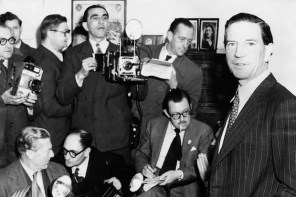
Secondly and recently, I have known two instances of when young university graduates who, on applying for jobs with MI6, have their families and partners interviewed for background clearance. Understandable and perfectly laudable. These people know what they’re doing, you idiots. They’re from a higher sphere of intelligence and influence despite the outing of the Cambridge spies; Burgess, Maclean, Philby and Blunt being an incredible record of incompetence and naivety. Still take confidence in our secret services, surely you’ve read how in John le carre’s classic, ‘Tinker Tailor Soldier Spy’ George Smiley masterly flushes out the mole. The material above about Churchill is widely known and documented but consider this from wikipedia:
‘Philby is summarised as a British traitor and an anti-Semite. It is suggested Philby never forgave the British government for ending his civil service career (due to sexual misconduct). Once recruited by MI6, according to these authors, Philby used his intelligence assignment to take revenge on the British government. With the extensive contacts he acquired as a British agent, Philby continued to betray British policy and resist all efforts at creating a Jewish homeland throughout his life. Philby disclosed classified British intelligence to Ibn Saud during wartime; he secretly helped secure American oil concessions in Saudi Arabia, double-crossing British competitors; he created economic partnerships, allied against British interests and in favour of Nazi Germany, with the help of Allen Dulles (later CIA Director); and Philby worked with Nazi intelligence to sabotage efforts at creating a Jewish homeland.’
..and your point is? – Well the Philby above isn’t Kim Philby one of the Cambridge four, it’s his father St John Philby!! Good background checking, I don’t think, you shaken but not stirred fuckwits.
https://en.wikipedia.org/wiki/St_John_Philby (Occupation:- Arabist, explorer, writer and…intelligence officer!)

The Experiment was a documentary series broadcast on BBC television in 2002 in which 15 men were randomly selected to be either “prisoner” or “guard”, contained in a simulated prison over an eight-day period. The men were initially tested and screened by clinical psychologists and were broadly judged to be ‘good ‘men.”The BBC Prison Study explored the social and psychological consequences of putting people in groups of unequal power. It examined when people accept inequality and when they challenge it”.
In a very short time indeed, the disunion between the two groups encompassed phases of conflict, order, rebellion and tyranny. The guards lacked a sense of common identity from the start. They could not agree on values and goals leading their group to be disunited and vulnerable to exploitation by various prisoners. Some members of both groups did try to work hard to achieve their group goals but were frustrated – either because they lacked group identity and group power or because they are unwilling to exert group power. As a result they became burnt out, despondent and stressed. The conclusions of the study point to important links between social psychological factors (group identity, group solidarity) and significant clinical outcomes (anxiety,depression). Mental health may be ‘all in the mind’, but the state of the mind is powerfully shaped by the quality of group life.
So what has this got to do with the likes of Mr. Trump?!
See if you can read any similarities what transpired in those eight days and what is happening in America today. Here are the conclusions of the study:
Successful groups give their members the power to put ideas into practice; this brings psychological benefits to individual members. The implications for a society vary and will depend upon the particular belief systems associated with particular groups. Where these beliefs are undemocratic and oppressive, groups can be tyrannical. Conversely, where these beliefs are democratic and open, groups can safeguard humanity.
But why do people support oppressive groups? When and why do we fall under the spell of tyrants? Our study suggests that this happens when groups fail. When people cannot realize their own values and beliefs, they are more likely to accept alternatives – however drastic – that provide the prospect of success. In particular, when their group is failing, they are more likely to embrace a strong figure who promises to make things work for them. It is this combination of failure and promise which made our participants become more authoritarian. In history too, these are conditions that have precipitated tyranny.
The answer to tyranny is not to distrust or to fear power. It was this that created problems for the Guards’ regime and for the Commune. Rather, the answer is to use group power responsibly, democratically and in defence of humane values. In this way, we can act together to resist tyranny – either one imposed by others or one made by ourselves.
In Statistics, discrete variables, such as people, apples and words, are countable. Before leaving the pub, you’re asked.. “How many glasses of wine have you had?” You can’t have 1.5 televisions. On the other hand, continuous quantities such as time, height, volume, alcohol and emotion (?) are measurable. The only limit to you knowing the length of your table is your measuring device. In fact you could argue that by continually zooming in on the end of the tape measure in ever-increasing smaller divisions , you can never state exactly how long the table is. On the way home from the pub you’re asked… “and how much have you had to drink, Sir?”
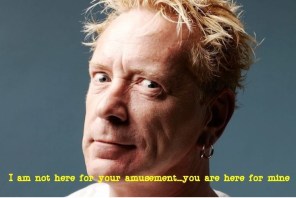
Could this be a explanation why it’s so difficult to convey our feelings and emotions which are fluid and indefinite by words which are concrete and finite. John Lydon certainly thinks so in this Radio 4 interview with Stephen Fry:
http://www.bbc.co.uk/programmes/p02z834v
 A Monkey in Manhattan